
Why Niche Fragrance Brands Are Losing Sales Before Anyone Smells the Scent
You spent months — maybe years — perfecting your formula. You know every note in your fragrance pyramid. You can explain the drydown in three sentences. Your scent is genuinely exceptional.
And it still isn't selling the way it should.
Before you blame the formula, look at the box it came in.
Most niche fragrance founders believe their product sells itself. That the scent, once experienced, does all the work. But there's a problem with that logic: your customer has to decide to pick it up before they ever smell it. And that decision — the one that determines whether your fragrance gets tested or gets passed over — is made entirely on packaging.
Here's the uncomfortable truth: you may be losing sales before anyone smells your scent.
The 3-Second Shelf Reality
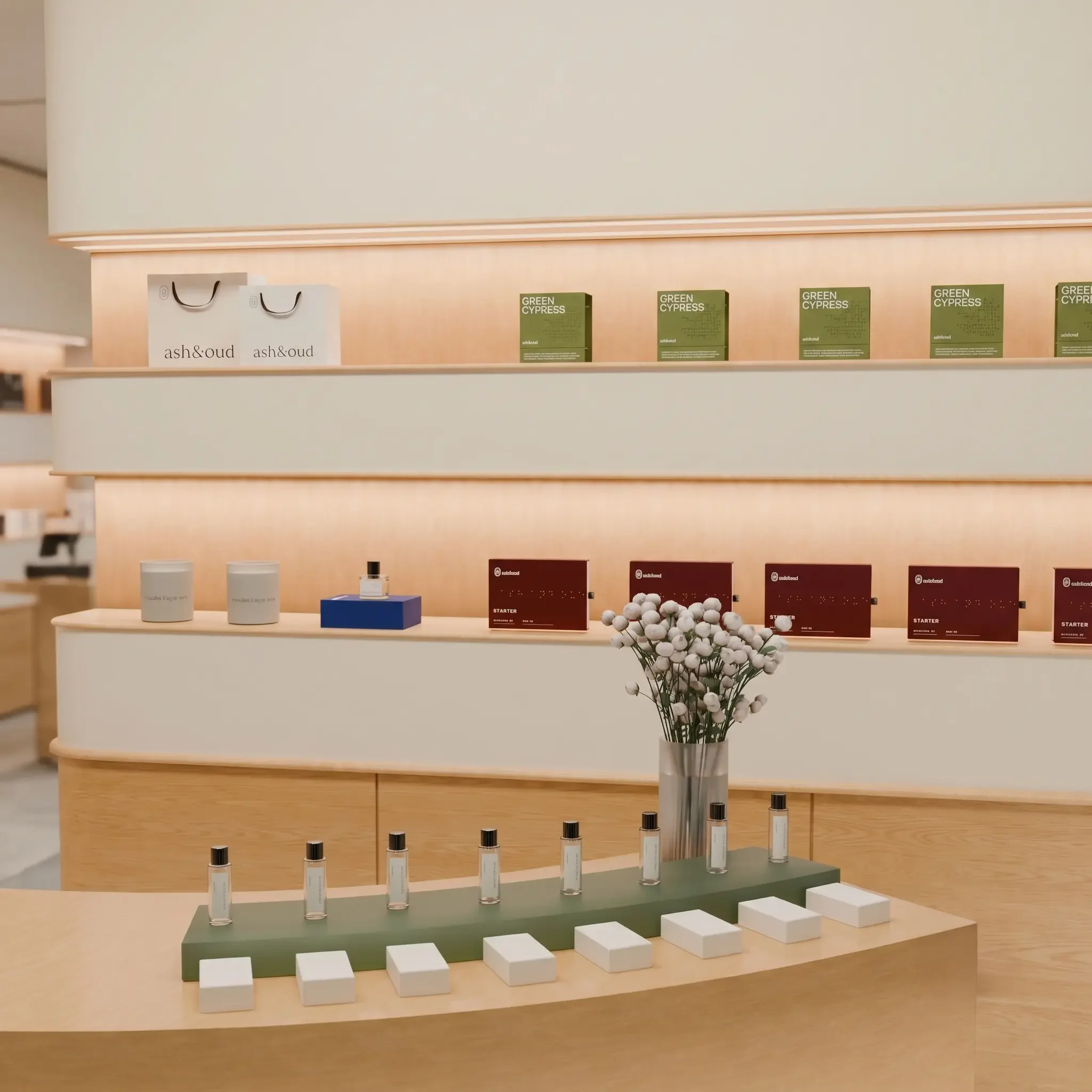
Walk into any boutique, specialty retailer, or fragrance pop-up. Give yourself three seconds to scan the shelf — exactly the amount of time a customer gives it before their eyes lock onto something or move on.
What stops the eye? Weight. Structure. Finish. The way light catches a foil stamp. The way a rigid box suggests there's something worth protecting inside.
What gets passed over? The clean white box with a printed label. The kraft sleeve that looked minimal on a mood board but reads as unfinished on a shelf crowded with considered packaging. The bottle displayed without secondary packaging at all, because the founder thought "let the fragrance speak for itself."
The fragrance never gets the chance to speak. The customer's hand never reaches for it.
This is the shelf test — and most niche fragrance brands fail it not because their product is weak, but because their packaging doesn't earn the three seconds needed for someone to lean in.
Consider what your packaging is competing with. At a boutique or concept store, your bottle sits next to brands that have invested in structural design, specialty finishes, and packaging that communicates value before a word is read. When a customer's eye lands on your competitor's matte black rigid box with a blind emboss, then lands on your white folding carton, they've already made a judgment about which brand is worth their attention.
That judgment happens in under three seconds. Your formula never enters the equation.
What Premium Shelf Presence Actually Requires
To pass the shelf test, your packaging needs to do three things without any words:
Communicate price point. A customer should be able to look at your box and have a rough sense of whether they're holding a $60 fragrance or a $160 one. If your packaging says $40 but your price tag says $120, you've created cognitive dissonance — and the customer resolves that dissonance by putting it down.
Signal category. Luxury fragrance has visual codes: weight, restraint, precision. Rigid boxes. Soft-touch lamination. Spot UV. Foil stamping. These aren't decorative choices — they're the language your customer uses to identify that this is a serious fragrance brand.
Reward closer inspection. The first glance earns the pickup. The pickup earns the closer look. At that moment, texture, construction, and detail matter. A box that feels flimsy when handled, has corners that don't sit flush, or uses a finish that chips — that's a brand that just lost a sale it almost had.
The Unboxing Experience That Kills Repeat Purchases
The shelf test is one place fragrance brands lose sales invisibly. But there's a second place — one that's harder to trace and more damaging in the long run.
It happens when the customer has already chosen you.
Online sales have created a new moment of truth for fragrance brands: the unboxing. Your customer found you through a recommendation, an Instagram post, or a targeted ad. They were convinced enough by your digital presence to convert. They spend $120, $150, $200. And then the package arrives.
The box is thin. The lid doesn't have the satisfying resistance they expected. The tissue paper inside is generic. The bottle rattles slightly in its insert. It doesn't feel like $150.
That moment — the gap between what the packaging promised online and what it delivered in person — is where repeat purchases die.
It's also where reviews are written. Not angry reviews that say "the packaging was bad." Quiet reviews that say "it was fine, but I expected more for the price." Or worse: no review at all, and no second order.
The formula might be exceptional. The scent might be everything they hoped for. But the experience that surrounds it told a different story, and that's the story they remember.
The Loyalty Math
Fragrance is a repeat purchase category. A customer who loves your scent and loves the experience of receiving it will reorder. They'll buy the next scent in your line. They'll give it as a gift. They'll recommend it to people who ask what they're wearing.
A customer who loves your scent but felt underwhelmed by the packaging experience will reorder maybe once. They'll be slower to recommend it. The friction is invisible — they won't even consciously attribute it to the box — but the lifetime value of that customer drops significantly.
This is why the most successful niche fragrance brands treat packaging not as a cost to be minimized, but as an investment in customer retention. The box is part of the product. The experience of opening it is part of what they're selling.
Why Fragrance Founders Underinvest in Packaging
If the shelf test and the unboxing experience are both this critical, why do so many niche fragrance brands still treat packaging as an afterthought?
Three reasons come up consistently.
Formula-first thinking. Most founders come from a background in fragrance — they trained as perfumers, they worked in a fragrance house, they built their expertise around scent. Packaging sits outside their comfort zone. It feels like a detail rather than a core part of the product.
Sticker shock at early quotes. When a founder first requests a quote for rigid custom packaging with specialty finishes, the number surprises them. Compared to a folding carton or a generic box, the premium feels significant. What gets missed is the revenue math: if better packaging converts 20% more browsers to buyers at a higher sustainable price point, the investment pays for itself quickly.
Underestimating what's achievable at their MOQ. There's a persistent belief among smaller fragrance brands that luxurious custom packaging is only accessible at massive order quantities. In reality, manufacturers who specialize in luxury packaging work with brands at growth stages — the question is knowing how to source correctly, what to ask for, and how to structure a first order.
What Packaging Is Actually Communicating
Every packaging decision you make communicates something specific to your customer before they read a word.
The weight of the box tells them whether you take your product seriously. The finish tells them which tier of luxury they're operating in. The construction tells them whether this was designed with care or assembled with whatever was available. The insert tells them whether they were considered, or whether the bottle was an afterthought inside an oversized box.
None of this is conscious on the customer's part. It's felt, not analyzed. But it drives behavior.
When your packaging communicates that you are a serious fragrance brand — when it says, through its weight and structure and finish, "this is worth what we're charging" — customers believe it. They pick it up. They test it. They buy it. They come back.
When your packaging creates doubt — when it signals "this might be a startup that hasn't figured everything out yet" — even a genuinely exceptional fragrance struggles to close the sale.
Where to Start
If you're reading this and recognizing your current packaging in these descriptions, the path forward isn't as complicated as it might feel.
Start with a structural sample. Before committing to any production run, get a physical sample of what your packaging will actually look and feel like. Not a rendering. Not a proof. A sample you can hold, open, and put on a shelf next to your competitors' products.
That sample is the most valuable decision-making tool you have. It tells you whether the box earns the three seconds on the shelf. It tells you whether the unboxing experience matches your brand promise. It tells you whether you're ready to go to market with this packaging, or whether one more iteration will make the difference between a product that sells and one that sits.
At Neu Dynamic, we manufacture custom luxury packaging for niche fragrance brands — from rigid perfume boxes and candle cartons to reed diffuser packaging and gift sets. Our structural samples ship within 7 days, so you can make your decision before committing to production.
If your packaging isn't earning the sale before the customer smells the scent, that's the place to start.
